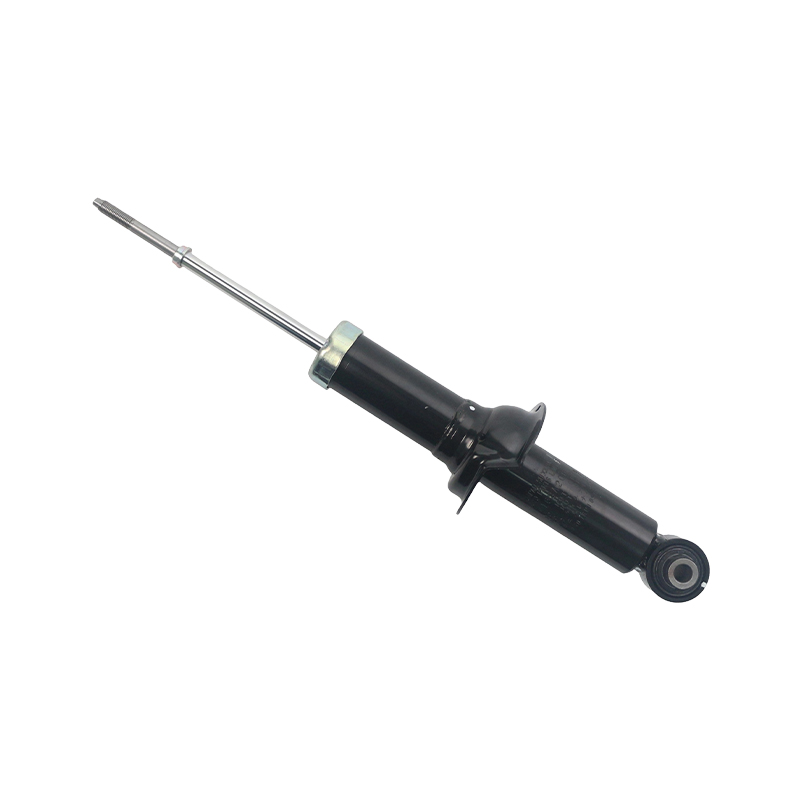
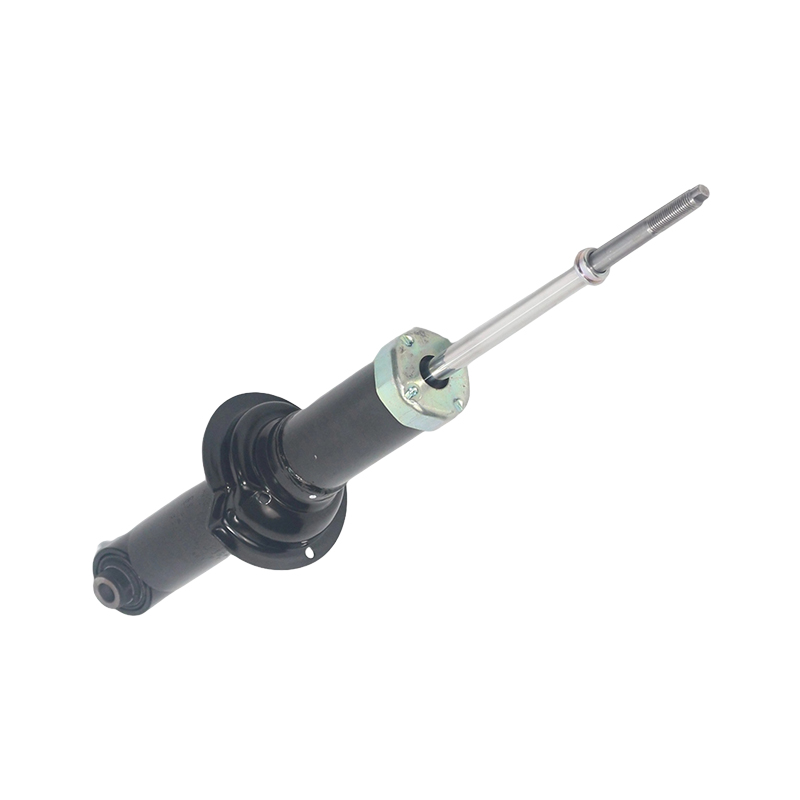
How do automobile shock absorbers work in conjunction with springs and the vehicle's electronic control system to improve high-speed cornering stability?
Publish Time: 2026-02-16
In modern automotive dynamic performance tuning, high-speed cornering stability is not only related to driving pleasure but is also a core indicator of active safety. This performance is not determined by a single component but is the result of deep collaboration between the shock absorbers, springs, and the vehicle's electronic control system within the suspension system. The automobile shock absorber, acting as a "force modulator" connecting the wheels and the vehicle body, plays an irreplaceable role in suppressing body roll, controlling tire contact, and responding to electronic commands.1. Basic Mechanics: Functional Division of Labor between Shock Absorbers and SpringsSprings are responsible for supporting the vehicle's weight and absorbing road impact energy, but they cannot dissipate energy themselves—without shock absorbers, a vehicle would experience significant body roll due to centrifugal force during cornering and continue to oscillate after returning to center. The core function of the shock absorber is to control the spring's movement speed, converting kinetic energy into heat energy through the resistance generated by the internal fluid flowing through the valve system. During high-speed cornering, the outer suspension compresses while the inner suspension stretches. The shock absorber, through its asymmetrical damping design, effectively limits the body roll rate and amplitude, maintaining a stable center of gravity.2. Dynamic Load Management: Maintaining Optimal Tire ContactWhen cornering, vehicle weight shifts outwards, increasing the vertical load on the outer tires and decreasing it on the inner tires. If the suspension response is sluggish, the inner tires may partially lift off the ground, losing traction. High-performance shock absorbers rapidly adjust damping force through a high-frequency response valve system, adapting to load changes within milliseconds to ensure all four wheels remain firmly in contact with the ground. Especially in continuous S-curves or lane-changing situations, the shock absorbers' "follow-up" capability directly determines the continuous output of lateral force from the tires, thereby improving the limits of handling.3. Intelligent Collaboration with Electronic Body SystemsModern vehicles are generally equipped with electronic stability control systems, active anti-roll bars, or electronically controlled damping systems. When ESC detects understeer or oversteer, it sends commands to the shock absorber control unit to adjust the damping force of individual wheels in real time. For example, when there is a tendency to understeer during a left turn, the system automatically increases the rebound damping of the right front shock absorber to suppress the front end lifting, while simultaneously increasing the compression damping of the left rear shock absorber to reduce rear axle sideslip, forming a composite intervention of "virtual differential braking + suspension stiffness adjustment." This collaboration allows the vehicle's trajectory to more closely match the driver's intentions, significantly improving stability during high-speed lane changes and emergency obstacle avoidance.4. Technological Evolution: From Passive to Predictive ControlTraditional passive shock absorbers rely on fixed valve systems, making it difficult to balance comfort and handling. The new generation of electromagnetic rheodynamic shock absorbers uses magnetic particles to suspend oil, continuously adjusting damping force within 1–5 milliseconds by changing the coil current. More advanced systems even integrate camera and navigation data to achieve pre-aiming control: identifying the curvature of upcoming curves in advance and pre-adjusting the shock absorber stiffness, allowing the vehicle to "prepare before entering the curve." For example, BMW's iDrive 8 system, combined with map information, can automatically switch to sport suspension mode before entering a high-speed ramp, greatly optimizing cornering posture.The automobile shock absorber has long transcended its original function of "buffering vibrations," evolving into an intelligent execution terminal for high-speed dynamic control. It forms the physical basis with springs and creates a perception-decision-execution closed loop with the electronic system, precisely controlling vehicle posture, tire load, and response characteristics during high-speed cornering. It is this multi-layered collaboration that allows modern cars to ensure passenger safety and comfort while pursuing ultimate handling, demonstrating the wisdom of chassis engineering in combining rigidity and flexibility.