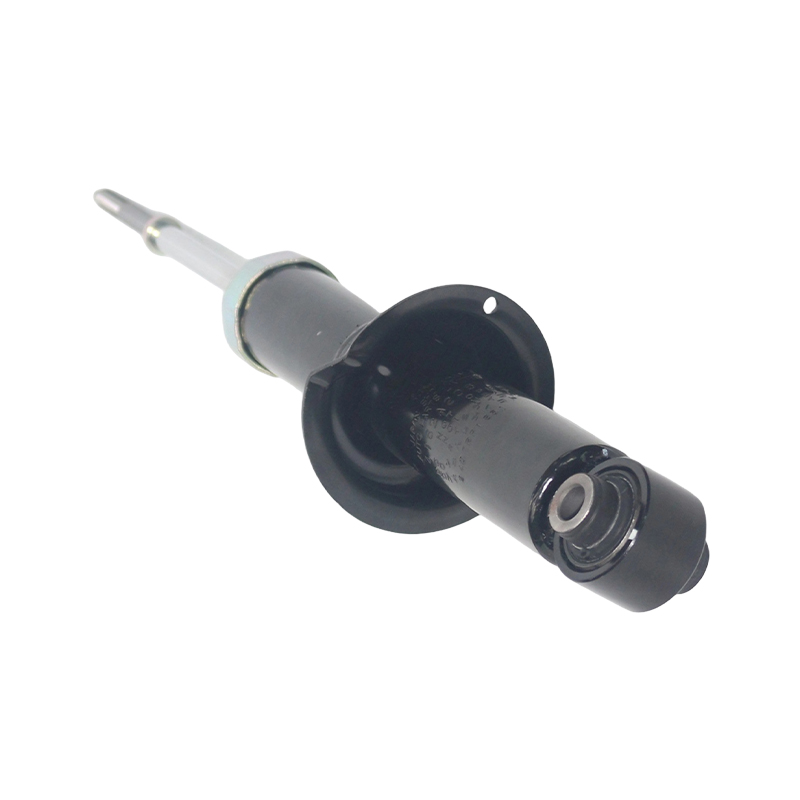
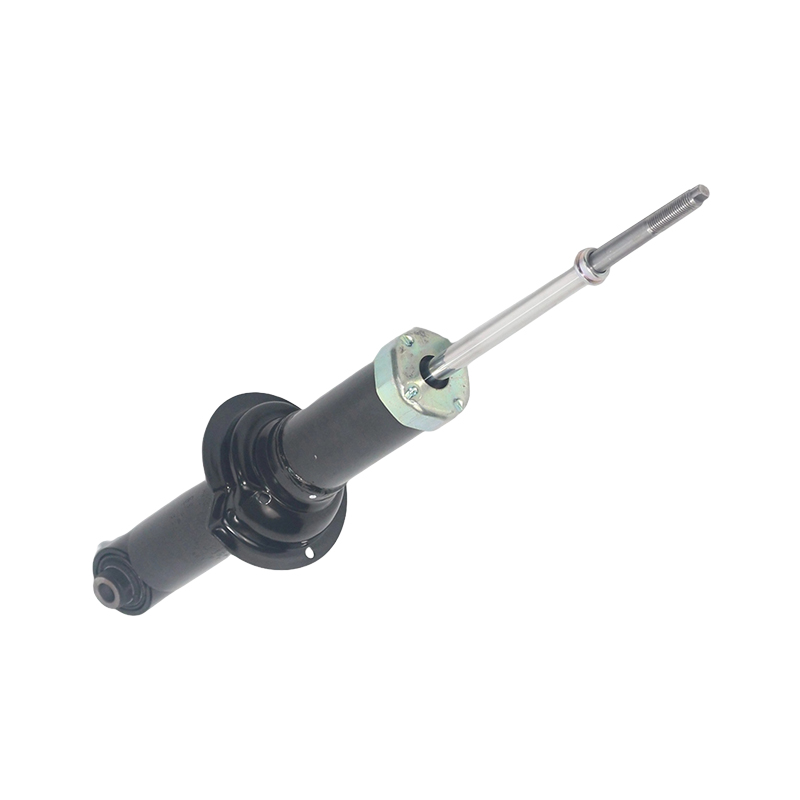
How do automobile shock absorbers effectively improve vehicle stability during high-speed cornering through precise damping control?
Publish Time: 2026-02-03
During high-speed driving, especially during aggressive cornering, a vehicle's dynamic performance depends not only on tire grip and chassis geometry, but also, and perhaps more profoundly, on the shock absorbers' real-time ability to adjust the vehicle's posture. As a core component of the suspension system, the automobile shock absorber is far more than a simple "damper." Through precise damping control technology, it adjusts the relative movement between the wheels and the vehicle body within milliseconds, significantly improving stability, grip, and driving confidence during high-speed cornering.1. Suppressing Body Roll and Maintaining a Stable Center of GravityWhen a vehicle enters a corner at high speed, centrifugal force causes significant body roll, resulting in compression of the outer suspension and extension of the inner suspension. If the shock absorber damping is insufficient, the body will tilt excessively, affecting not only ride comfort but also altering the tire contact angle and weakening lateral grip. High-performance shock absorbers effectively limit the rapid deformation speed of the springs by enhancing the coordinated control of rebound and compression damping. Especially in corners, the high rebound damping of the outer shock absorber slows down the vehicle's sag, while the inner shock absorber uses appropriate compression damping to prevent the wheels from leaving the road. This "combination of stiffness and flexibility" damping strategy significantly reduces body roll and makes weight transfer more controllable, laying the foundation for stable cornering.2. Maximizing Tire Contact Area and Enhancing Grip LimitsTires are the only part of the vehicle in contact with the ground, and their contact area directly determines the handling limits. In corners, if the shock absorbers are sluggish or the damping is mismatched, the wheels may lose some contact with the ground due to bouncing or suspension, causing a sudden drop in grip. Precisely damped shock absorbers can quickly absorb the impact of minor road undulations and rapidly return to their original position, ensuring the tires remain firmly in contact with the ground. For example, in continuous curves or bumpy bends, high-frequency, low-amplitude vibrations are efficiently filtered by the shock absorbers, preventing wheel "bouncing"; simultaneously, a reasonable low-speed damping setting can finely adjust the vehicle's pitch and roll rates, resulting in a more balanced load distribution across all four wheels. This "ground-hugging" control capability allows the tires to maintain maximum friction potential even at the limits.3. Intelligent Damping System Achieves Dynamic Adaptive AdjustmentWhile traditional fixed-damping shock absorbers are structurally reliable, they struggle to balance the conflicting demands of comfort and handling. Modern high-end vehicles widely employ variable-damping shock absorbers, which use sensors to monitor vehicle speed, steering angle, lateral acceleration, and body posture in real time, adjusting damping force dozens of times per second. At high-speed cornering, the system automatically switches to "Sport Mode," significantly increasing damping stiffness and suppressing body roll; during cornering acceleration, it softens appropriately to absorb rear axle bounce and prevent fishtailing. This dynamic adaptive capability allows the vehicle to maintain optimal body control under different driving styles and road conditions, truly achieving a stable "man-machine unity" experience.