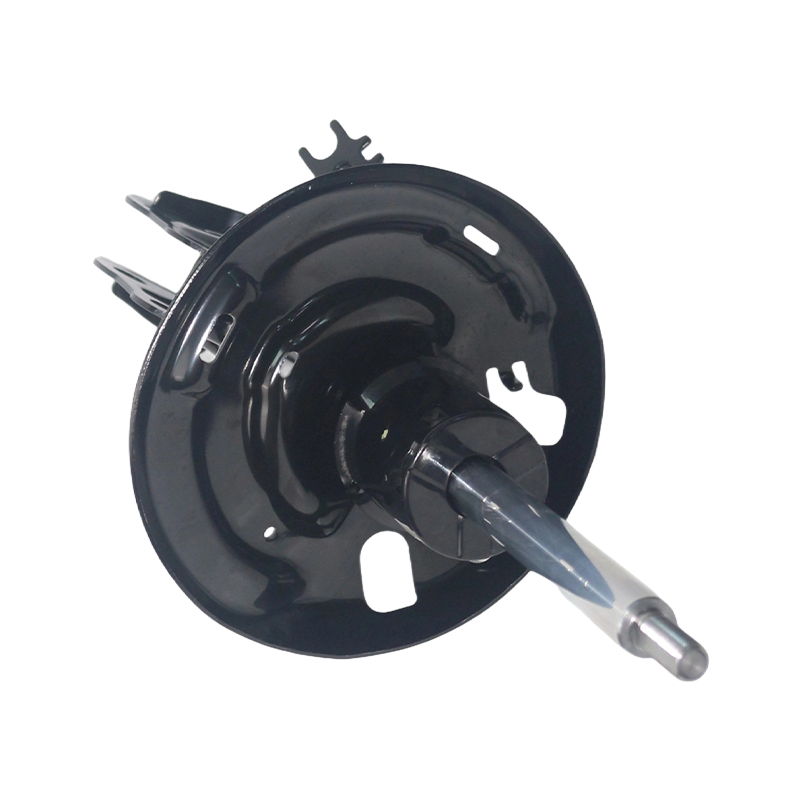
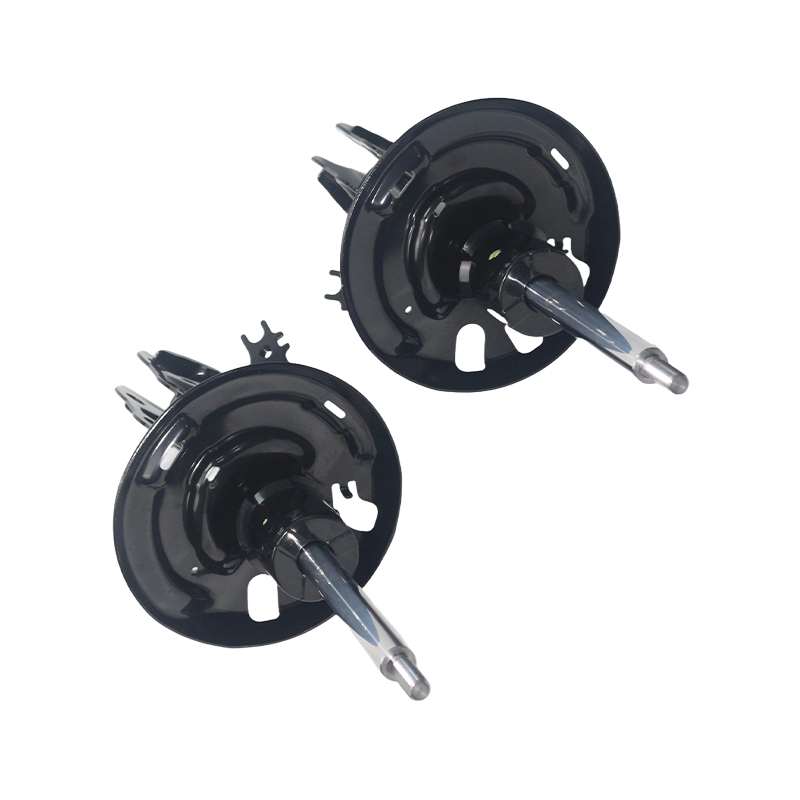
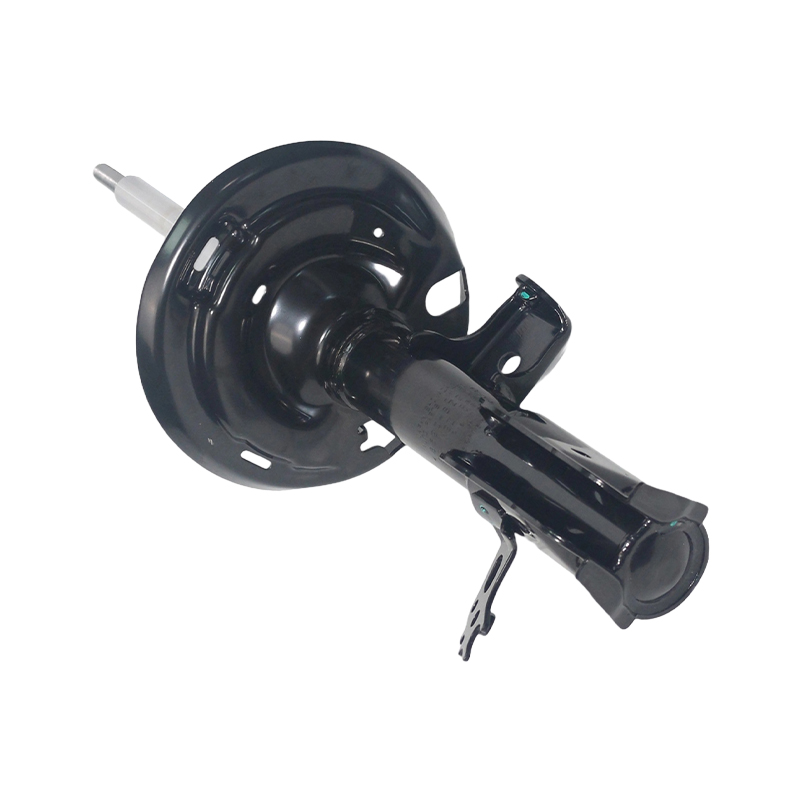
How does an automobile shock absorber achieve intelligent adaptive adjustment based on road conditions?
Publish Time: 2025-12-24
In modern automotive engineering, the suspension system is not only a mechanical structure connecting the vehicle body and wheels, but also a core element determining ride quality, handling performance, and safety. As consumers increasingly demand a "high-performance" driving experience, traditional passive shock absorbers are no longer sufficient to meet the complex and ever-changing road environment. An automobile shock absorber—through the collaboration of sensors, control algorithms, and actuators—achieves real-time, dynamic adjustment of damping force, allowing the vehicle to automatically switch to its optimal state under different road conditions. This "road-condition adaptive" capability is becoming an important technological label for high-end and new energy vehicles.1. From Passive to Active: The Technological Evolution of Intelligent AdjustmentTraditional hydraulic shock absorbers rely on internal oil flowing through a fixed valve system to generate damping force; their characteristics cannot be changed once set. Intelligent shock absorbers incorporate adjustable mechanisms, primarily falling into three categories:Adjustable hydraulic: Uses solenoid valves to alter the oil circuit, achieving two levels of damping stiffness or continuous adjustment;Pneumatic: Utilizes compressed air to adjust spring stiffness and vehicle height, often integrated with the shock absorber;Electric/magnetorheological: Employs current to control the viscosity of magnetorheological fluid, changing damping force within milliseconds.Among these, electromagnetic rheology technology, due to its fast response and high control precision, is widely used in high-performance vehicles, such as GM's Magnetic Ride Control system.2. Perception-Decision-Execution: The Three Pillars of an Adaptive SystemThe "adaptive" capability of intelligent shock absorbers relies on a complete closed-loop control system:Perception Layer: Acceleration sensors, steering angle sensors, wheel speed sensors, and cameras/radars distributed throughout the vehicle collect real-time data on road excitation, vehicle posture, and driving intentions.Decision Layer: The electronic control unit calculates the required damping force for each shock absorber hundreds of times per second based on preset algorithms or AI models. Execution Layer: Electric or electromagnetic actuators rapidly adjust the internal valve systems or fluid characteristics of the front and rear shock absorbers to achieve precise response.For example, when the system detects that the vehicle is about to go over a speed bump, it will soften the damping of the front small vibration zone in advance to absorb the impact; while during high-speed cornering, it will simultaneously increase the support of the rear universal suspension to suppress body roll.3. Differentiated Adjustment of Front and Rear Axles: Balancing Comfort and HandlingThe intelligent system is not simply "all stiff" or "all soft," but rather customized according to axle load distribution and functional requirements. The front suspension is mainly responsible for steering response and braking stability, so it will instantaneously increase damping during emergency braking to prevent "nose dive"; the rear suspension focuses more on load adaptability and ride comfort, especially in SUVs or pickup trucks where a rear universal design is used to automatically compensate for vehicle posture under different loads.Some high-end models even feature independent control of the left and right shock absorbers—increasing damping on the outer side and moderately relaxing it on the inner side during cornering, improving grip while reducing lateral sway for passengers.4. Multiple Modes and User Customization: Personalized Driving ExperienceModern intelligent damping systems typically offer multiple driving modes, which users can select via the central control screen or knob. Furthermore, some brands support a custom mode, allowing drivers to individually set the front and rear damping intensity. For example, choosing "soft front, moderate rear" for city commuting balances vibration damping and support; switching to "firm front and rear" for track days maximizes high-performance.In addition, models with pneumatic suspension can simultaneously adjust vehicle height—lowering the center of gravity to reduce wind resistance at high speeds and increasing ground clearance for off-road driving, achieving a dual adaptive of "adjustable pneumatic + intelligent damping."5. Special Needs and Innovations in the New Energy EraElectric vehicles, due to their heavy battery packs and low center of gravity, present new challenges to shock absorbers: they must suppress high-frequency vibrations caused by unsprung mass while reducing operating noise to match a quiet cabin. Electric shock absorbers generally employ low-friction seals, quiet hydraulic fluids, and active noise reduction algorithms. Simultaneously, the lack of an engine obstruction and the compact front compartment space have prompted manufacturers to develop more compact front-small integrated shock absorber modules, achieving high performance and intelligence within limited space.